post thumb

September 25th 2025

Selecting Care Equipment For Larger Patients

When selecting medical equipment for patient care, it’s important to consider a service user’s body shape, height and range of movement. Weight and BMI alone do not provide a complete picture of a person’s care equipment needs. By considering body shape and weight...

When selecting medical equipment for patient care, it’s important to consider a service user’s body shape, height and range of movement.

Weight and BMI alone do not provide a complete picture of a person’s care equipment needs. By considering body shape and weight distribution as well as the individual’s ability to move and perform tasks – comfort, safety, and dignity can be prioritised.

In this blog post, we explain what the five common plus size body shapes are and some key factors that are likely to affect the level of safety, comfort and dignity that need to be addressed.

With the right knowledge, skills and equipment, we can ensure that service users of all shapes and sizes are cared for in the very best way.


Plus size patient care is not one-size-fits-all. There are five common plus size body shapes and depending on the specific shape of your service user, there will be certain equipment and positions that you will need to factor in to ensure they are comfortable.

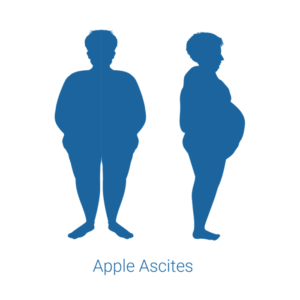
1. Apple Ascites

People with an apple ascites body shape have a high waist to hip ratio. This weight distribution often means patients have trouble tolerating any supine (lying flat on back) or prone (lying facing down) position.

The rigid abdomen causes restricted chest wall movement, decreased diaphragmatic activity, and hypertrophy of accessory muscles.

They will be very uncomfortable if you want them to lay down in treatment and will be most comfortable in an upright position.

2. Apple Pannus

This body shape is characterised by a large, hanging abdominal apron (pannus), which can lead to hygiene challenges, skin breakdown, and difficulty standing upright. There are different grades of pannus:

  • Grade 1 pannus covers the pubic hairline but not the entire mons pubis.
  • Grade 2 pannus covers the entire mons pubis.
  • Grade 3 pannus covers the upper thigh.
  • Grade 4 pannus extends to midthigh.
  • Grade 5 pannus extends to the knee and beyond.

They may be more comfortable lying on their side with pillows to support their pannus.

3. Pear Adducted

Individuals with a pear-adducted shape carry most of their weight in their hips and thighs. Their legs tend to remain close together with excessive tissue on the outside of the thighs. Lower adducted extremities are in-line with the body.

The lower limbs in this case can typically achieve a midline (straight) position as the weight is distributed to the outside rather than the inside, making positioning of the hips, legs and feet far easier than the Pear Abducted shape.

Individuals with this body shape tend to move from supine to sit via long sitting or may seek rolling technique.

To accommodate wider thighs, this individual may require a wider seat.

4. Pear Abducted

Individuals with a pear-abducted shape carry their weight below the waist with a low waist to hip ratio. Femurs are in an abducted posture because most of the tissue bulk is medially located about the thighs and prevents the knees from making contact or midline posture.

This can make seated postures difficult and transfers more complex.

Limitations in hip and knee flexion may be present. In sitting, the individual will present with the legs abducted or spread.

They should be able to tolerate supine position and breathe comfortably as the weight distribution is lower down.

5. Gluteal Shelf

This body shape features a pronounced protrusion of tissue at the lower back and upper buttocks, creating a “shelf” that affects how individuals sit and recline.

This body shape typically has increased stress on the lower back which can cause pain to both the upper and lower back.

The extra tissue can cause a posterior pelvic shift, which can lead to sliding out of the chair. Chairs with adjustable seat depth and pressure-relieving cushions help accommodate the posterior protrusion and prevent pressure sores.

A log roll may not be the best option for this body type. Careful repositioning techniques are essential to prevent strain on the lower back and improve spinal alignment.

Seating

To get the correct seating solution for a plus size person, a correct hip to hip measurement needs to be taken.

When the person is sat up, their body shape can change compared to standing or lying down. When seated, the individual’s pannus needs to be factored into the measurement.

A correct seat width should allow for hip support and stability which will aid in comfort and fatigue management. A chair with a seat width too wide can encourage leaning to one side which has a negative effect on the spine.

Seating

To get the correct seating solution for a plus size person, a correct hip to hip measurement needs to be taken.

When the person is sat up, their body shape can change compared to standing or lying down. When seated, the individual’s pannus needs to be factored into the measurement.

A correct seat width should allow for hip support and stability which will aid in comfort and fatigue management. A chair with a seat width too wide can encourage leaning to one side which has a negative effect on the spine.

Specialist Seating Solutions

  • Reclining chairs and tilt-in-space chairs help provide a more open hip angle to relieve abdominal pressure.
  • Chairs with adjustable seat depth and pressure-relieving cushions help accommodate the posterior protrusion and prevent pressure sores.
  • Bariatric seating with lateral support helps maintain a comfortable and secure seated position.
  • Rising and Reclining Seating offers the most flexibility to recline a person to the most comfortable position to suit their body shape while also allowing for a height adjustment to accommodate all heights.

Specialist Medical Beds

  • Hospital beds with adjustable profiling features ensure proper positioning and comfort. A suitable bed can be contoured to comfortably accommodate any of the five body shapes.
  • Hospital beds that can be adjusted to an ultra-low height enable those with reduced mobility to be able to retain more independence while reducing the reliance on caregivers.

Specialist mattresses

  • Pressure-relief cushions and airflow mattresses help reduce the risk of pressure sores in areas prone to moisture and friction. Those with reduced mobility and large amounts of excess tissue are at a higher risk of developing pressure sores.

Standing aids

  • Bariatric standing aids provide stability and assistance when transitioning to standing positions. A versatile piece of equipment, these can be combined with an ultra-low bed and/or hoists and lift pants for rehabilitation.

Hoists

  • Hoists with wide slings support the midsection during transfers.
  • Bariatric bedside commodes with extra depth ensure comfort and accessibility for toileting.

Toileting & Wheelchairs

  • Wheelchairs with extra-wide seats and contoured cushions provide adequate support and pressure distribution.
  • Bariatric bedside commodes with extra depth ensure comfort and accessibility for toileting.

The below grid has been developed to show the level of risk to the caregiver associated with the five body shapes and the five levels of mobility.  This helps to determine the individual level of care and supporting equipment required to deliver that safely, effectively and compassionately.

For example, a person with an Apple Ascites body shape that is bed bound would typically be a medium risk to a care provider in comparison to a person with an Apple Pannus body shape that typically carries the greatest risk where more specialist equipment and care are likely to be needed.

While the grid is a helpful visual, the Five team always carry out an assessment of a patient or service user to ensure that the right equipment is provided and fitted correctly to the individual.

In addition to providing the equipment, training is always given on delivery and more in-depth educational training on manual handling techniques are delivered in our accredited CPDs.

Why Understanding Body Shape Matters

By considering body shape in addition to BMI, caregivers and healthcare professionals can make more informed decisions about the type of medical equipment needed for the individual.

In addition to this, asking “what is your normal movement for the task?” will help preserve the service user’s current state of mobility and by teaching or guiding a service user to do tasks unaided, their level of mobility and independence can be promoted and enhanced.

This patient-centric, holistic approach enhances safety, comfort, and dignity while promoting independence and reducing the risk of pressure injuries, respiratory distress, and mobility challenges.

At Five Mobility, we provide tailored equipment solutions and educational training to support all body shapes and sizes, ensuring that both patients and caregivers have the right tools for safe, effective and dignified care.

If you need guidance on selecting the best equipment, contact our expert team today. We can even supply a shape suit that can be configured to all the five common plus size body shapes, so that you can train with real-life scenarios.


References

  1. National Pressure Injury Advisory Panel (NPIAP) Guidelines on Pressure Ulcer Prevention.
  2. Pandya, R. (2022). Guide to bariatric transfers and manual handling. OccupationalTherapy.com, Article 5509.

For support with equipment selection for larger patients, or plus size patient manual handling training, please call 0800 193 2523